
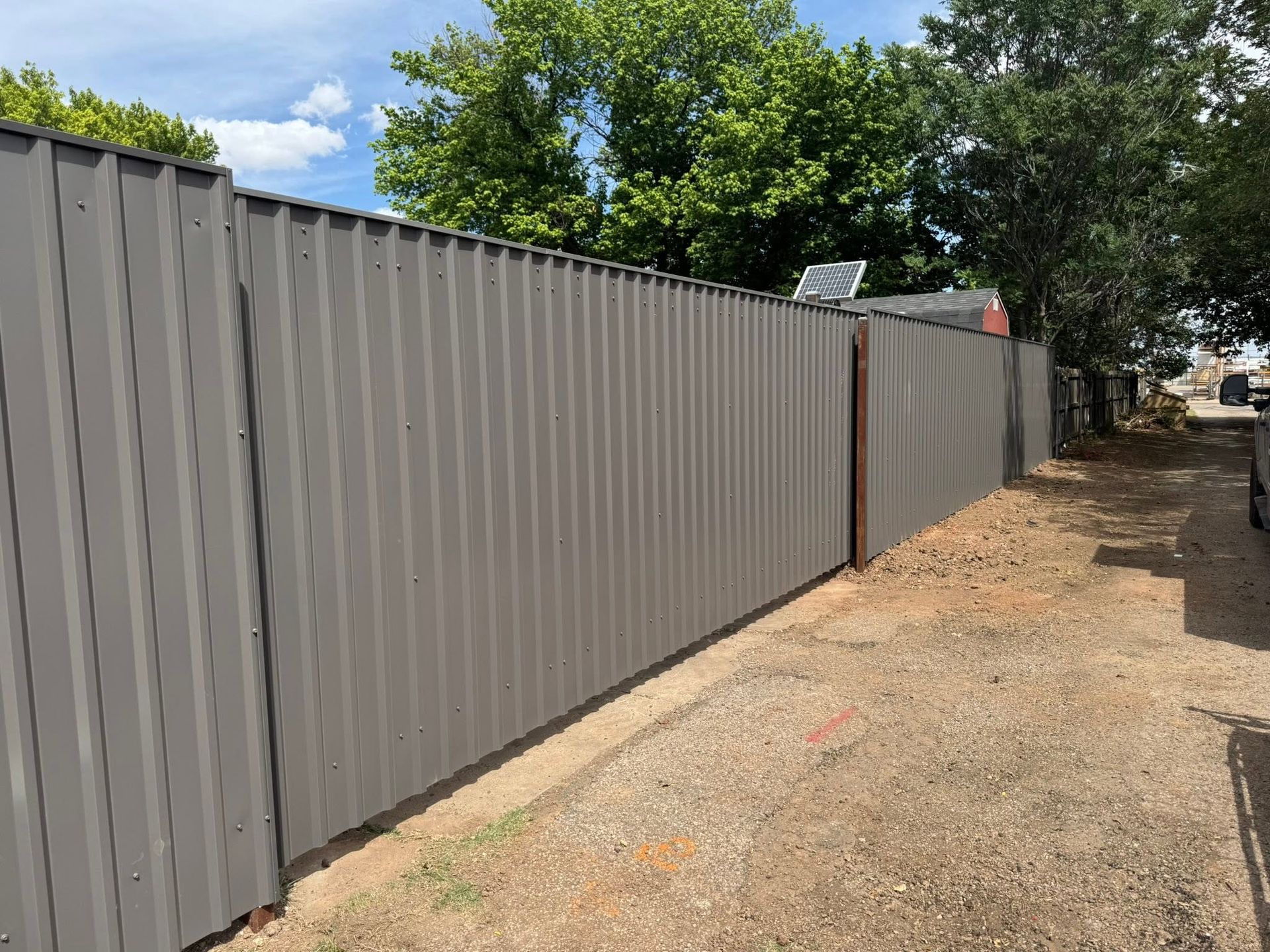
Boundaries That Hold Up to Panhandle Conditions
Commercial Fencing in Amarillo for businesses managing open sites, wind exposure, and controlled access
Up Industries LLC installs commercial fencing that addresses the specific demands Amarillo businesses face when managing property lines and access control across exposed terrain. Property managers throughout the Texas Panhandle deal with steady wind, temperature swings, and the challenge of securing open lots where fencing must perform reliably without constant upkeep. When a commercial site lacks clear boundaries or controlled entry points, operations become harder to manage and security vulnerabilities multiply.
Commercial fencing establishes physical boundaries that define loading zones, storage areas, equipment yards, and restricted access points while withstanding the constant wind and weather typical of the region. The construction must account for soil conditions, post depth requirements, and gate hardware that functions reliably even after exposure to blowing dust and temperature extremes.
Request a quote to review your site dimensions and identify the right approach for your property layout.
What Proper Commercial Fencing Requires
The process begins with evaluating how the site will be used—whether the priority is defining lot lines, restricting vehicle access, securing stored materials, or organizing different work zones. Post placement must accommodate the open, windswept conditions common across Amarillo's landscape, which means deeper footings and reinforced corners where lateral stress accumulates over time.
Once installation is complete, the site has visible, durable boundaries that clarify where operations occur and where access is restricted. Gates open and close without binding or sagging, even after months of wind exposure, and the fence line remains straight and secure without leaning or shifting. The enclosure functions as intended without requiring frequent adjustments or repairs due to environmental stress.
The project scope depends on whether the fence must meet specific height requirements, accommodate existing utilities or drainage features, or integrate with entry systems already in place. Some installations require coordination with contractors managing other site improvements, while others involve working around active operations without disrupting daily workflow.
What Contractors and Property Managers Usually Ask
Commercial fencing decisions depend on understanding what the installation must accomplish and how the site's conditions influence the construction approach.
What factors determine post spacing and depth for commercial fencing?
Post placement depends on fence height, expected wind load, and soil composition. In Amarillo's open terrain, deeper footings and closer spacing prevent lateral movement and maintain long-term alignment even when sustained winds apply constant pressure to the fence line.
How does commercial fencing handle gate operation under constant use?
Gates designed for commercial use include reinforced frames and hardware rated for frequent operation. Hinges and latches must resist binding caused by dust infiltration and temperature cycling, ensuring reliable function even when gates open and close dozens of times daily.
When should a business schedule commercial fencing installation?
Scheduling depends on site access, weather windows, and coordination with other contractors. Installation proceeds most efficiently when ground conditions allow proper post setting and when the site can be sectioned off without halting operations entirely.
What does commercial fencing include beyond the fence panels themselves?
The installation includes posts, gates, latches, and all hardware necessary for secure operation. It does not typically include grading, utility relocation, or site preparation beyond what's required for post placement, so existing drainage or landscaping issues should be addressed separately.
Why do some commercial fences require additional bracing or corner reinforcement?
Wind exposure and fence length determine whether additional bracing is necessary. Longer runs and taller fences transfer more lateral force to corner posts and gate openings, requiring diagonal bracing or reinforced footings to prevent sagging or misalignment over time.
Up Industries LLC evaluates each commercial site individually to match fencing construction with the property's exposure, access requirements, and operational priorities. Discuss your site layout and project scope to establish a plan that addresses your specific boundaries and security needs.